The Cathedral Church of the Holy and Undivided Trinity of Ely ❖ This project does not generally cover in detail the actual buildings on or near which dials are to be found. My header photo… More
ST BOTOLPH’S CHURCH . CAMBRIDGE – Vertical Dial
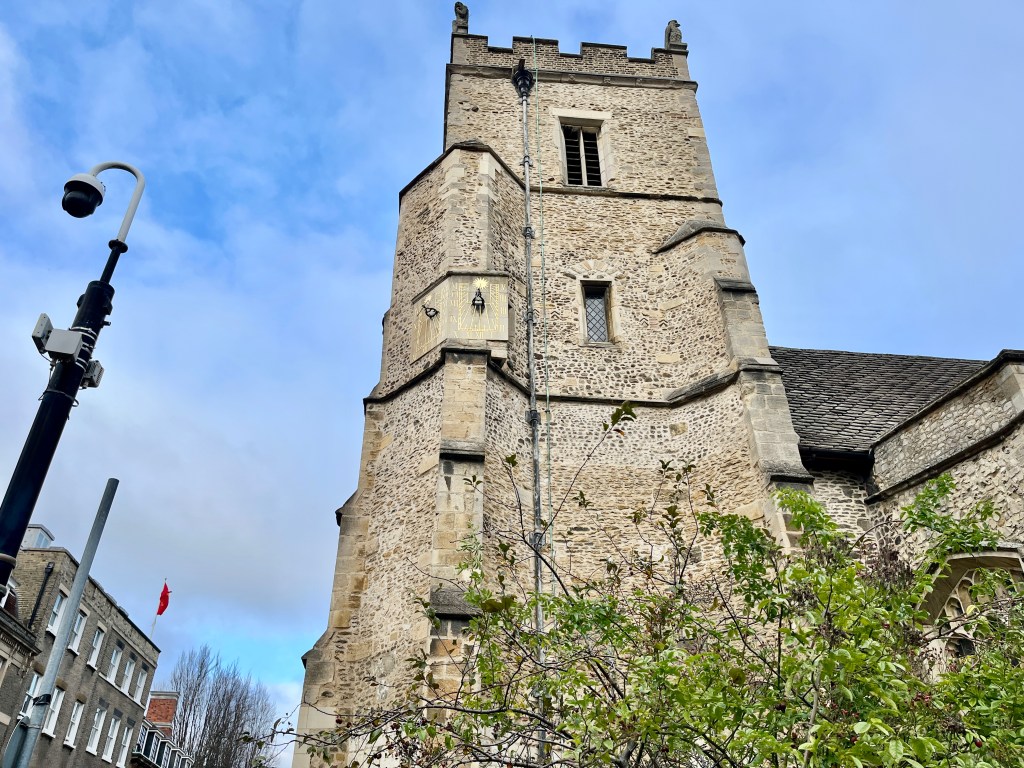
ST BOTOLPH’S CHURCH . CAMBRIDGE
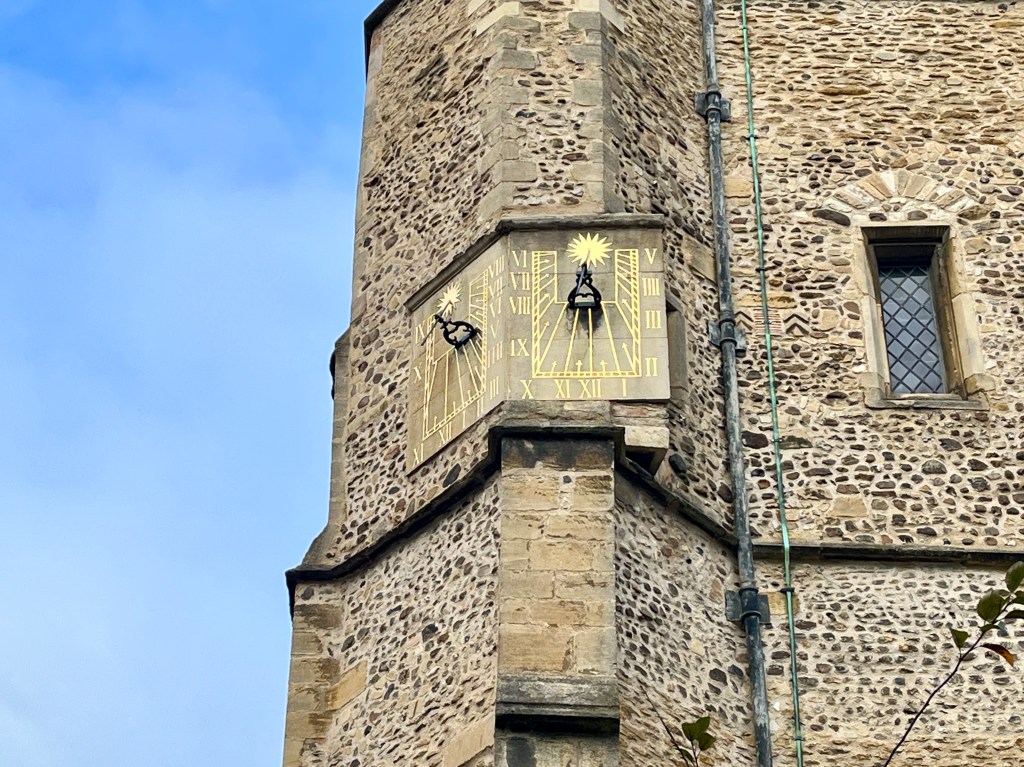
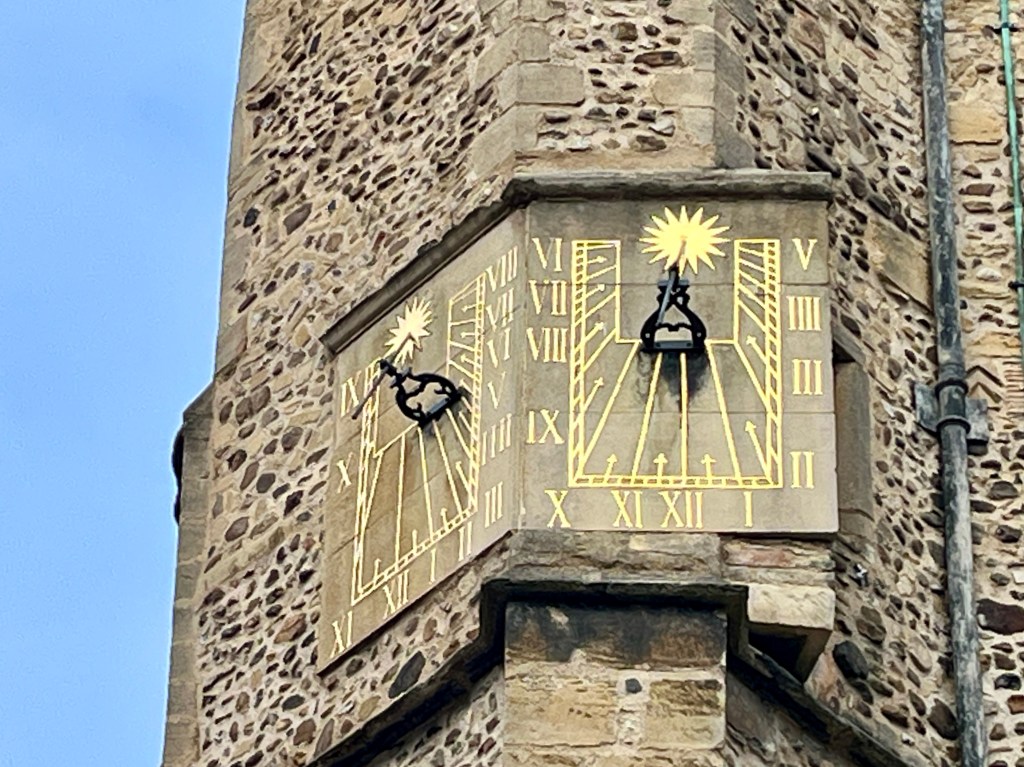
A large double-faceted dial high up on the SW buttress of the Church, above Trumpington Street. The faces are angled due S; and SW. They are easy to read despite the height, and appear to be in excellent condition. Comparing my recent photos with one from 2000, it looked as though the dial must have been repaired / repainted / refreshed since then. BSS confirms that the dial was recently re-gilded at August 2014.
Brooks and Stanier note that the present dial replaces a much earlier dial (date and position unknown) that was ‘designed by a Mr Butterfield and repainted in 1614 at a cost of 18 pence’.


GSS Category: Cambridge Sundial; University Sundial; Double facet dial;
All photos: © Keith Salvesen
KING’S COLLEGE . CAMBRIDGE – Vertical Dial
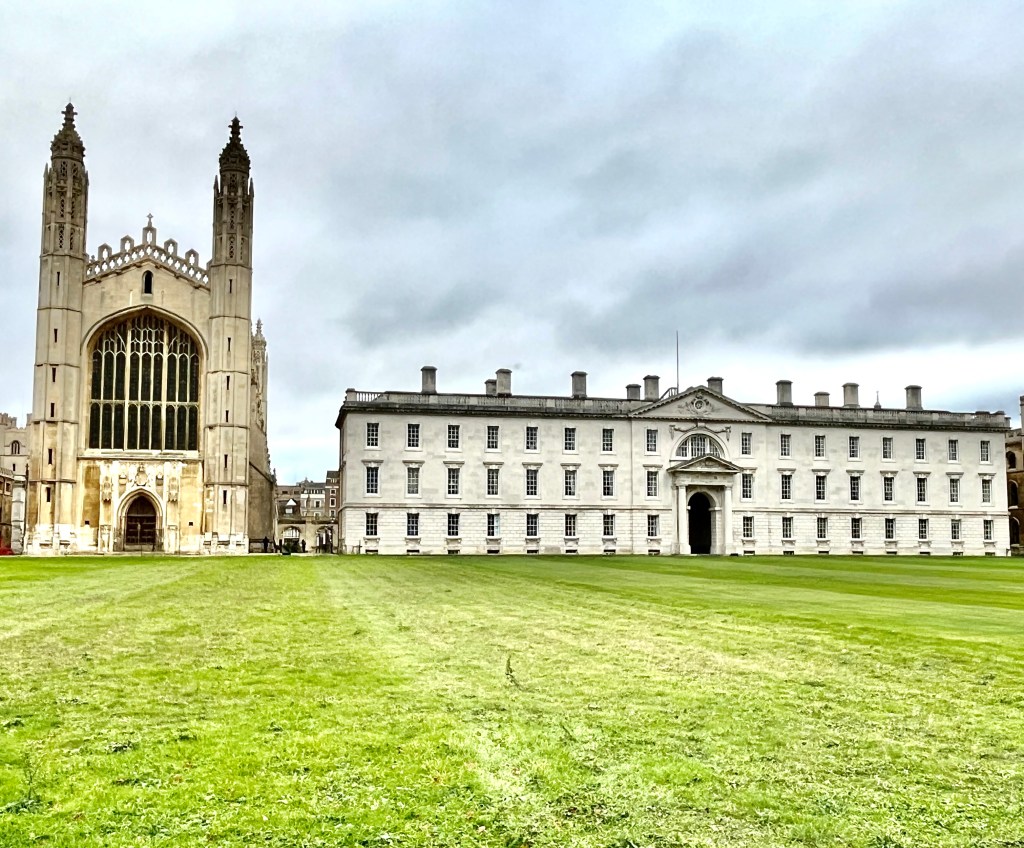
CHAPEL DIAL

❖
King’s College is one of the best-known Cambridge colleges, not least because of its pre-eminent choral music tradition. This fine dial is on the right side of the Chapel porch. The hour lines and numerals are painted in black directly onto the stone. The gnomon emerges through a golden sunburst, matched by two gold heraldic lions in the lower corners. The dial itself dates to 1733 (BSS) and the inscription J.C. 1578 on the face is a mystery: no specific association has been matched to it.


RESTORATION
As I researched this dial it soon became clear that it had undergone considerable recent restoration. The Brookes / Stanier booklet (L) was published c2000, with this illustration. The BSS entry (R) was made in 2007, and the dial’s condition seems to have worsened. At some stage I hope to find out more.

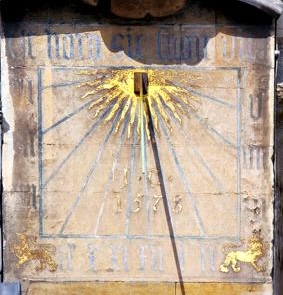
UT HORA SIC FUGIT VITA
The black-letter motto translates as ‘Life flies away like an hour‘ or an equivalent sentiment. There are a number of Latin variations of this rather gloomy prognostication.
King’s has a second short dial – the SORELY dial – close to the Chapel. I will add a link once I have written it up.
GSS Category: Vertical Dial; University Dial; Sundial Motto
All photos: Keith Salvesen; BSS; Brooks / Stanier ‘Cambridge Sundials’
EVERCREECH . SOMERSET – St Peter

ST PETER . EVERCREECH
GRADE 1 ❖ C14, C15, restored 1825 by Jesse Gane of Evercreech; further in 1843; late C19 work. Very tall 3-stage ‘Mendip-type’ tower, visible from some distance. Worthwhile interior. Town prosperity partly from silk and enhanced by railway in 1862 – axed by Beeching in 1966 despite intervention by John Betjeman. 51.1463 / -2.5026 / ST649386
UPDATE: Yesterday I wrote dismissively of the St Peter’s dial, based on camera photos. Now that I have seen my iPhone photos (almost always the best option for close-up shots but I had nearly run out of battery) I have changed my tune a bit…
DIAL
Emphatically not vaux le voyage, and included here mainly because in 1913 DEH counted it as a dial [85] when compiling his exhaustive record of Somerset scratch dials. On SE buttress of the tower he found a ‘quite clear’ circle with a shallow style hole, but without any lines. He put the design in his Doubtful category.


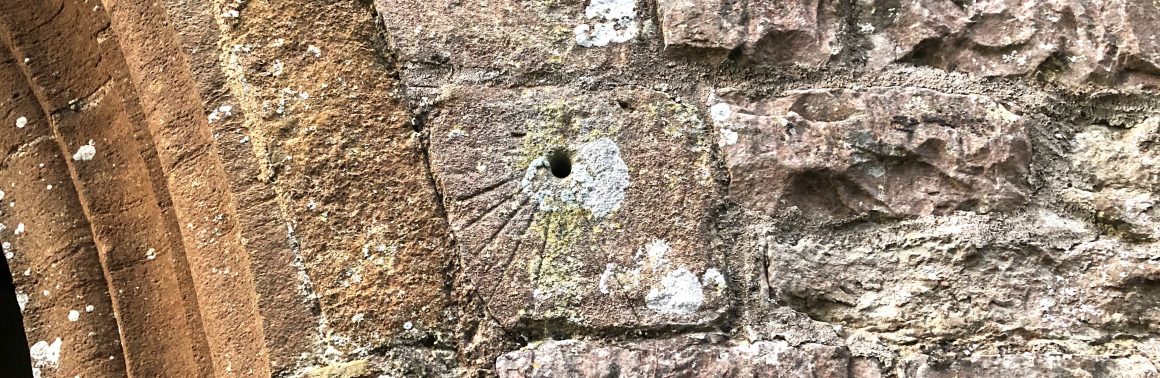
100 + years since the record was made, the circle has eroded away and the hole is not shallow. I had decided to demote this to the not-a-dial category. However, looked at closely and at an angle, it appears that what was once DEH’s ‘shallow hole’ has more recently been neatly drilled deeper into the stone (in fact, a dial would now be workable using a rod or stick). So I conclude that there is evidence of dialishness, though doubtful.

GSS Category: Scratch Dial; Somerset Scratch Dial; Dom Ethelbert Horne
Credits: photos and research – Keith Salvesen (Nov 2025)
VAL-d’ILLIEZ . DENTS DU MIDI . SWITZERLAND – St Maurice
 |
ST MAURICE . VAL-d’ILLIEZ

We passed this small church on the Swiss / French border several times, noting the dial and the commonplace Motto. The final time we passed through the village I took a photo from the car (I wasn’t the driver). There’s always some joy in collecting an unpretentious dial in congenial place. This is a rather blurry example.

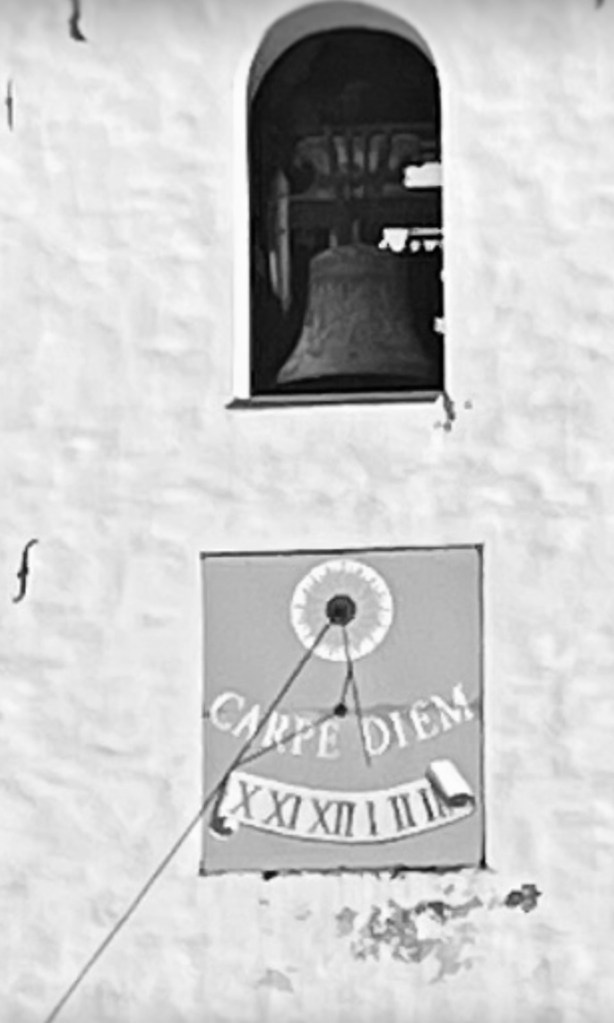
GSS Category: Vertical Dial; Church Dial; Sundial Motto; Carpe Diem
All photos: Keith Salvesen / Rolling Harbour
MAX GATE . DORCHESTER – Thomas Hardy’s Vertical Dial
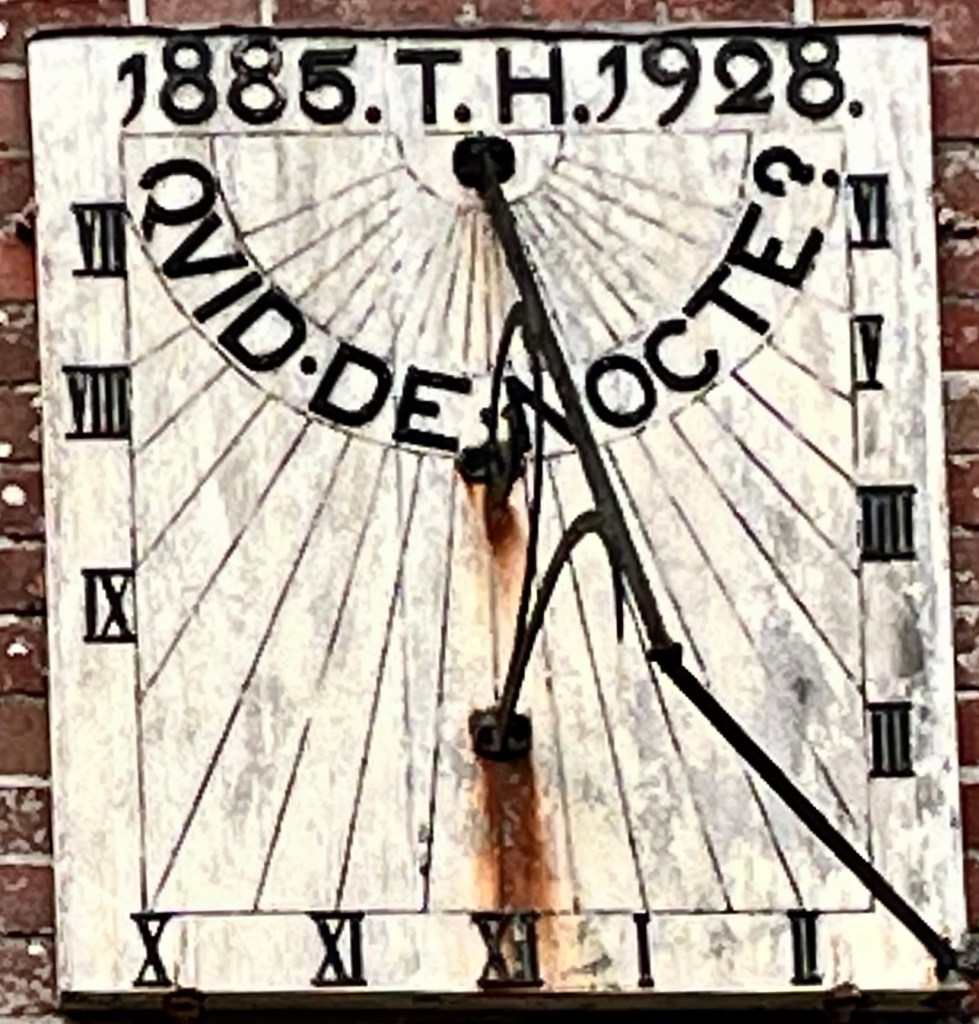
MAX GATE
Max Gate is a fine house on the eastern edge of Dorchester, designed and built by Thomas Hardy (with his father and brother) in 1885. He lived there until his death in 1928. He had two wives, Emma and then Florence, and during the ‘Max Gate years’ there were complicated relationships, sadly beyond the scope of this article.
In 1940 the house was bequeathed to the National Trust by Hardy’s sister. It was listed Grade I in 1970 with the stipulation that it should be lived in. The NT gives generous access to the interior, and there are conducted tours of the house and grounds. It is not exactly ‘lived in’, but it does feel homely rather than museum-like. To see Hardy’s desk and other writerly items feels a privilege. ‘Tess’ was written there, also ‘Jude’, the ‘The Mayor of Casterbridge’, and much of his poetry.

MAX GATE – VERTICAL SUNDIAL
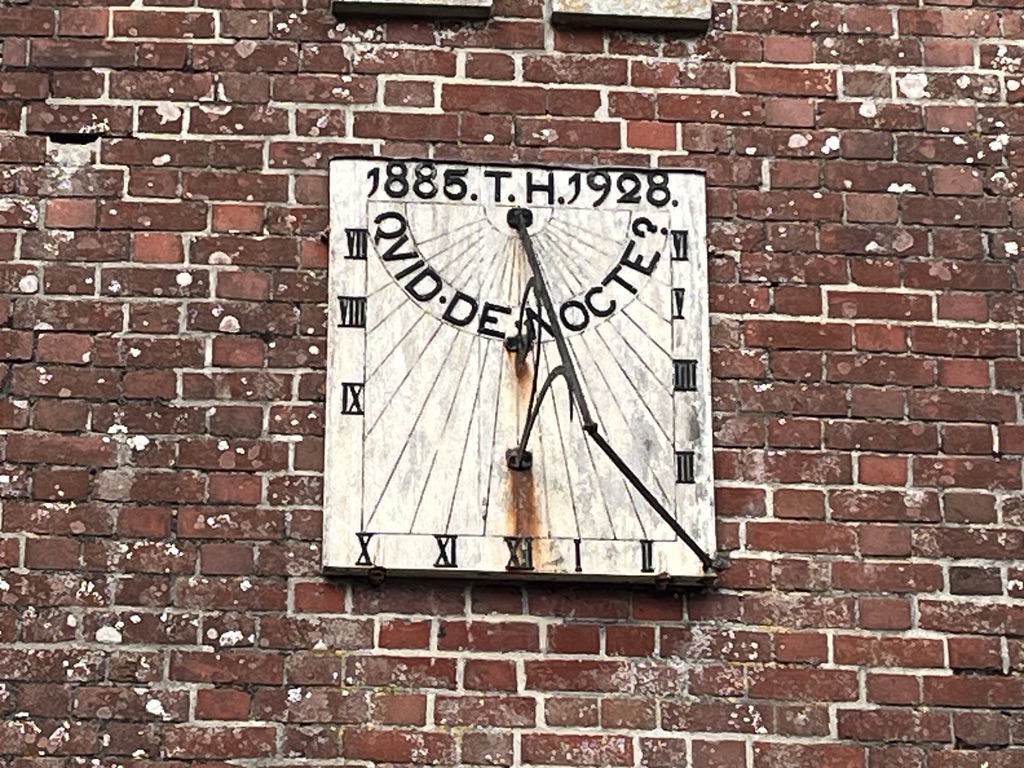
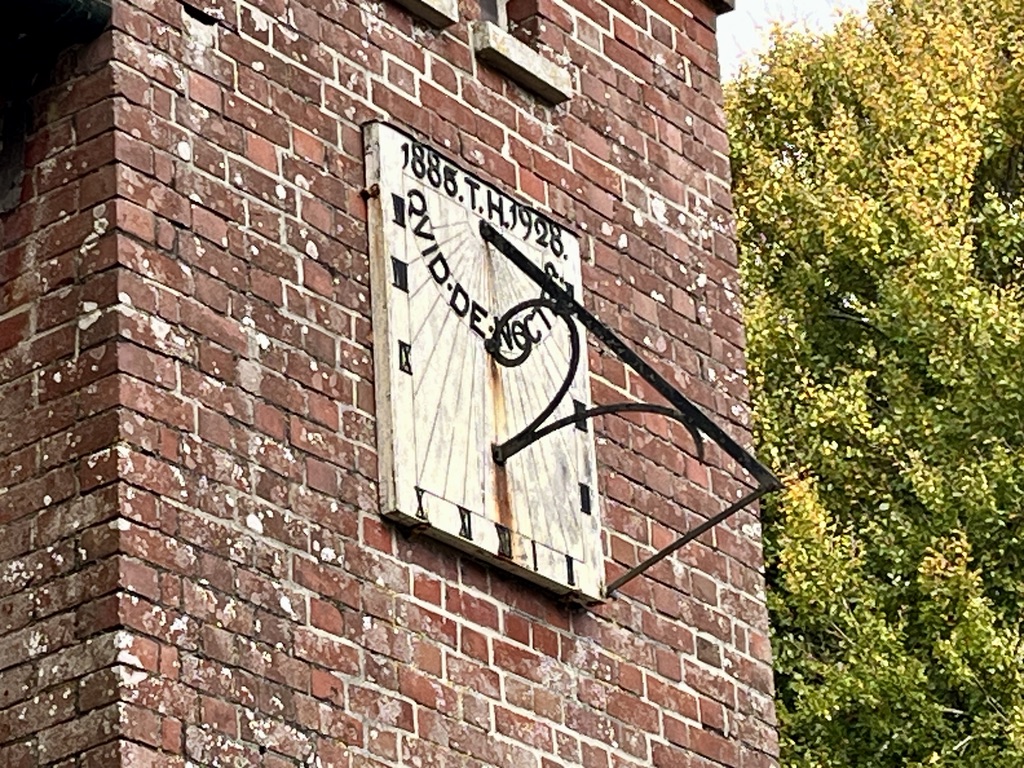
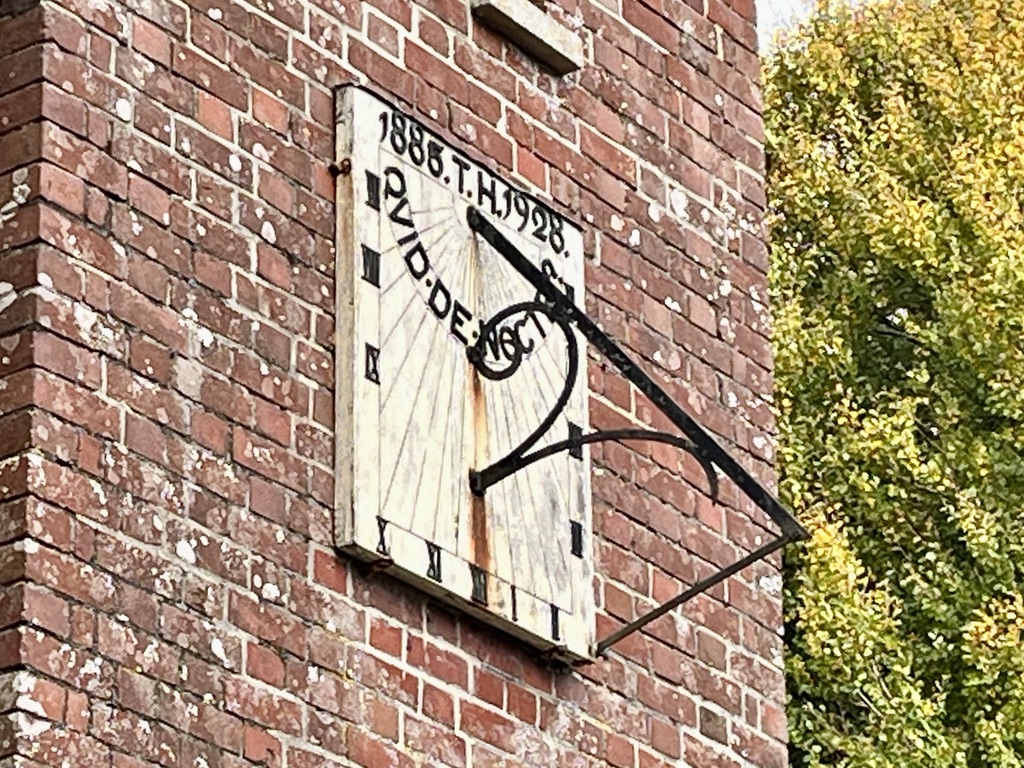
High up on the east tower, the dial is a good example of a sundial that (besides its primary use) acts as a memorial, and tastefully reflects the significance of the dedicatee. It is also very visible and easy to read at a distance. The lightly ornamental gnomon is moored at the bottom right corner as you face the dial. The style is simple, with 12 hours marked from 7.00am to 6.00pm and 24 radials to record half hours. The dial plate is white-painted wood. Overall the dial is in poor condition, but I gather that there are plans to carry out complete restoration during 2026.

.
MOTTO
QUID DE NOCTE?
Literally, ‘WHAT OF THE NIGHT ?’ Interrogative sundials are relatively unusual, and I am unsure when the inclusion of question-marks began. The simplest reply might be ‘NIHIL’ – the sun is asleep.

.The marriage certificate (1839) of Thomas Hardy’s parents at Melbury Osmond church, Dorset

GSS Category: Vertical Dial; Memorial Dial; Dial Mottoes
Credits: Keith Salvesen (all photos); National Trust; Melbury Osmond church
THORNCOMBE . DORSET – St Mary
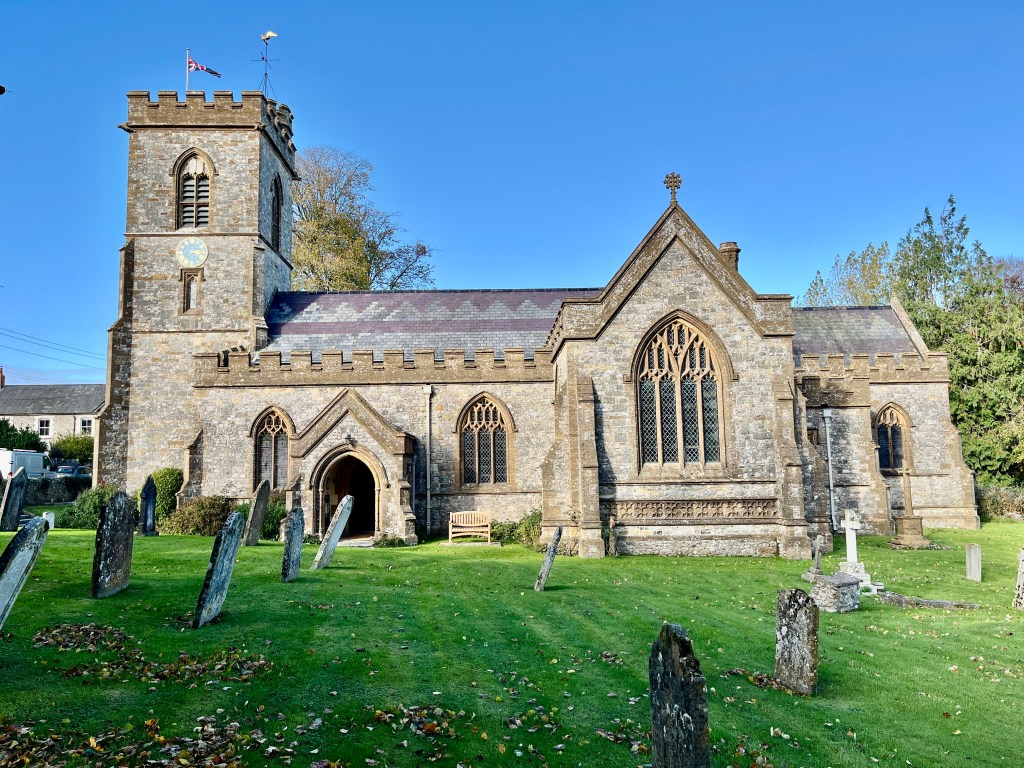
ST MARY . THORNCOMBE . DORSET
GRADE II ✣ Original dedication 1239; rebuilt 1867 perp. Dial re-sited. ‘The best brasses in Dorset’ (Pev.): full length, of Sir Thomas and Dame Joan Brook. A large church for a small village. Interesting (and at times somewhat lurid) history (see BLB). 6 miles SE of Chard. 50.8263 / 50°49’34″N . -2.8873 / 2°53’14″W . ST375033
LOCATION
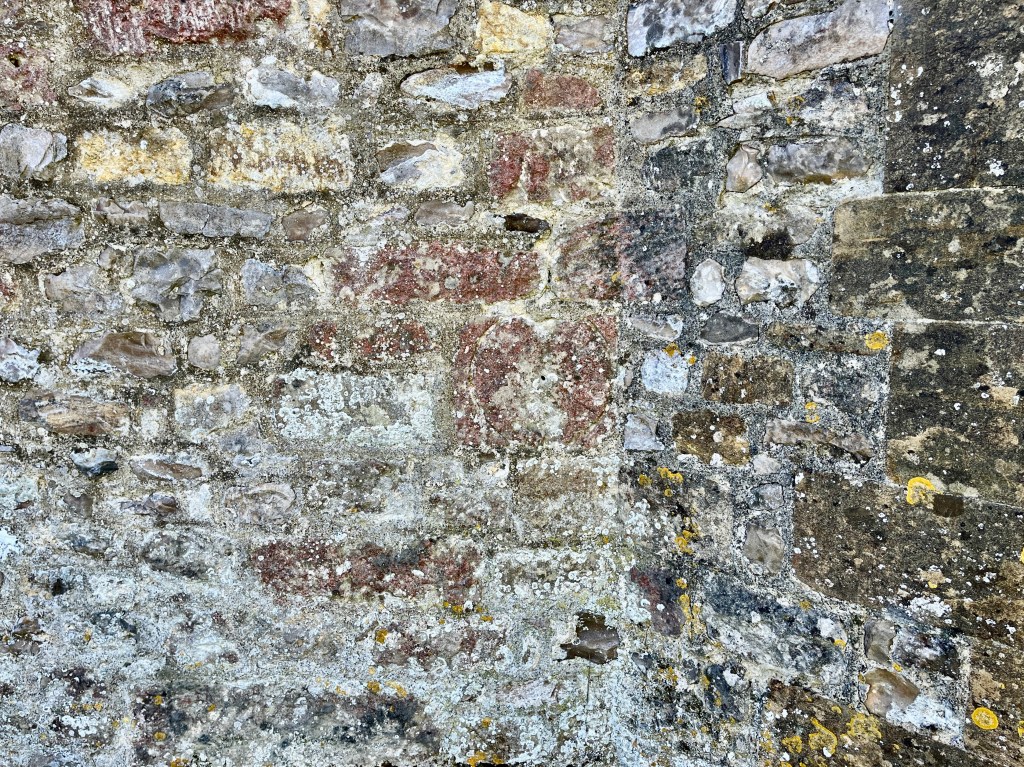
During the rebuild it looks as if care was taken to re-site the dial more or less intact. However, an obscure place was chosen, low down on N wall of the aisle, semi-hidden by a buttress. The dial is weathered and faint – even with the field notes of GLP, it took me a while to find it.
DIAL
The dial has a near-complete circumference line (damaged at the top) and 4 radials, of which only one is readily visible. Its 90° reorientation and its secluded position renders it useless for its purpose.


Rotating a B&W image of the dial-stone 90° clockwise gives a sense of how – in its original position – it would have acted as a marker for the progress of the day, observance times etc. In its current location it serves merely as a curiosity for the completest dial-chaser.

GSS Category: Relocated dial; Rotated dial 90°; North-facing dial
Credits: Gordon Le Pard (GLP) for his exhaustive research of the scratch dials of Dorset
RIPE . EAST SUSSEX – St John the Baptist
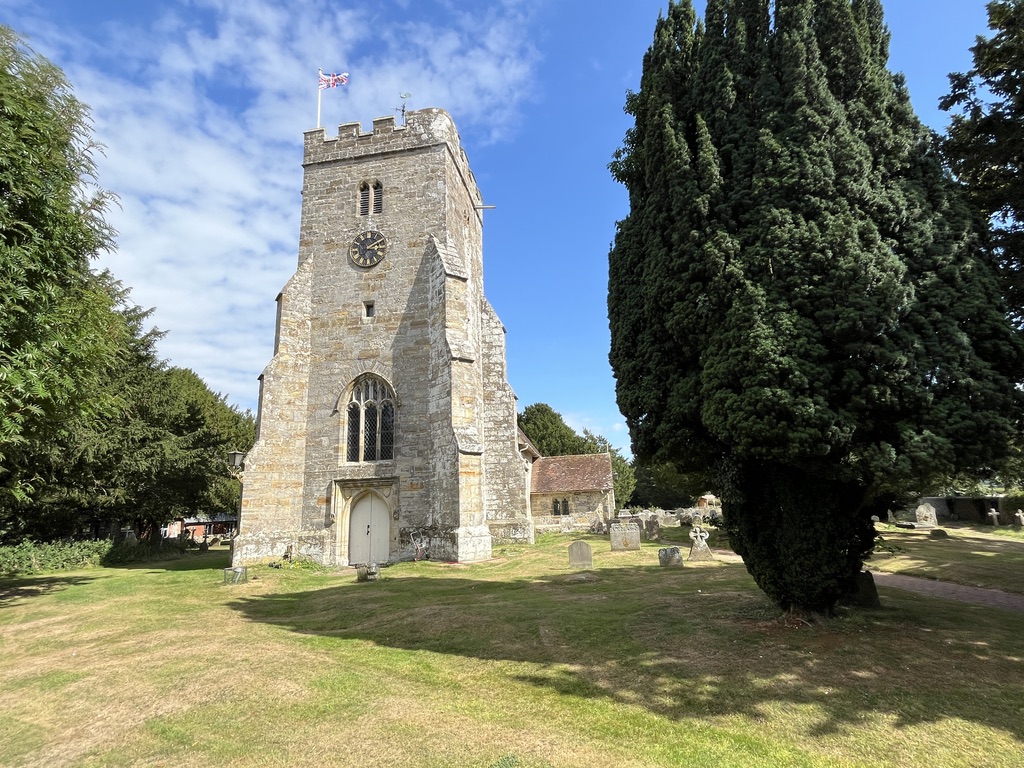
ST JOHN THE BAPTIST . RIPE
GRADE 1 ❖ C13 traces, mainly C14, C15. C19 restorations. Little information HE / BLB, but this link is informative https://sussexparishchurches.org/church/ripe-st-john-the-baptist/. One of a cluster of interesting churches in the area. 8 miles E of Lewes. 50.8684 / 0.15 / TQ513098
DIALS
❖
DIAL 1
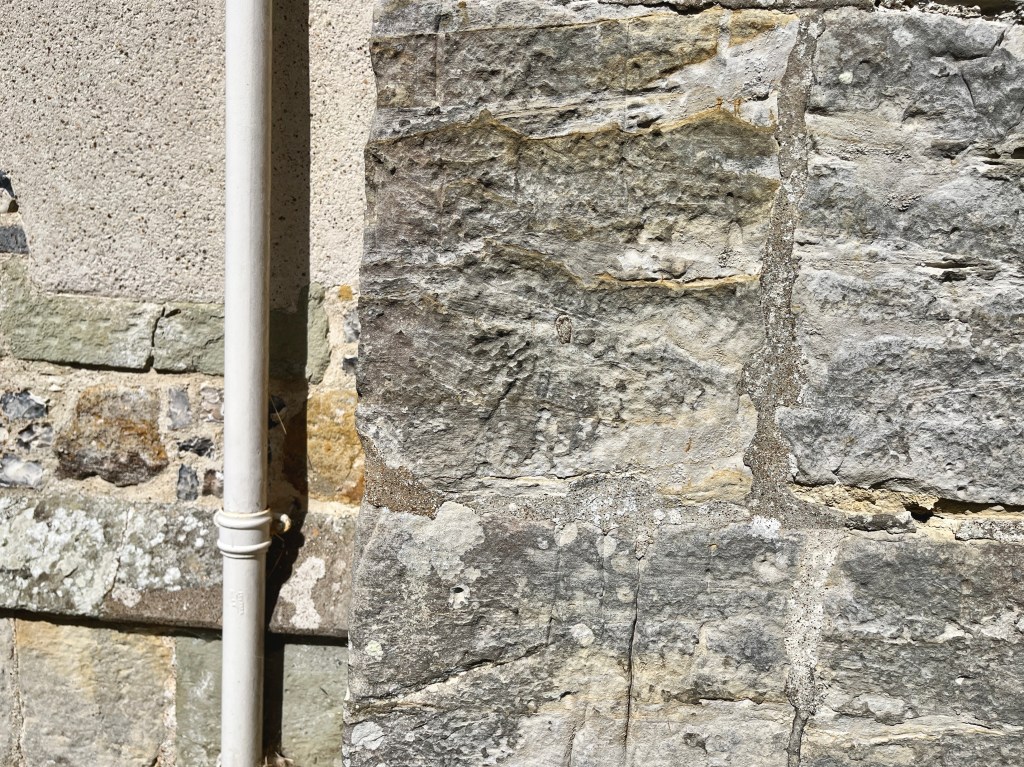
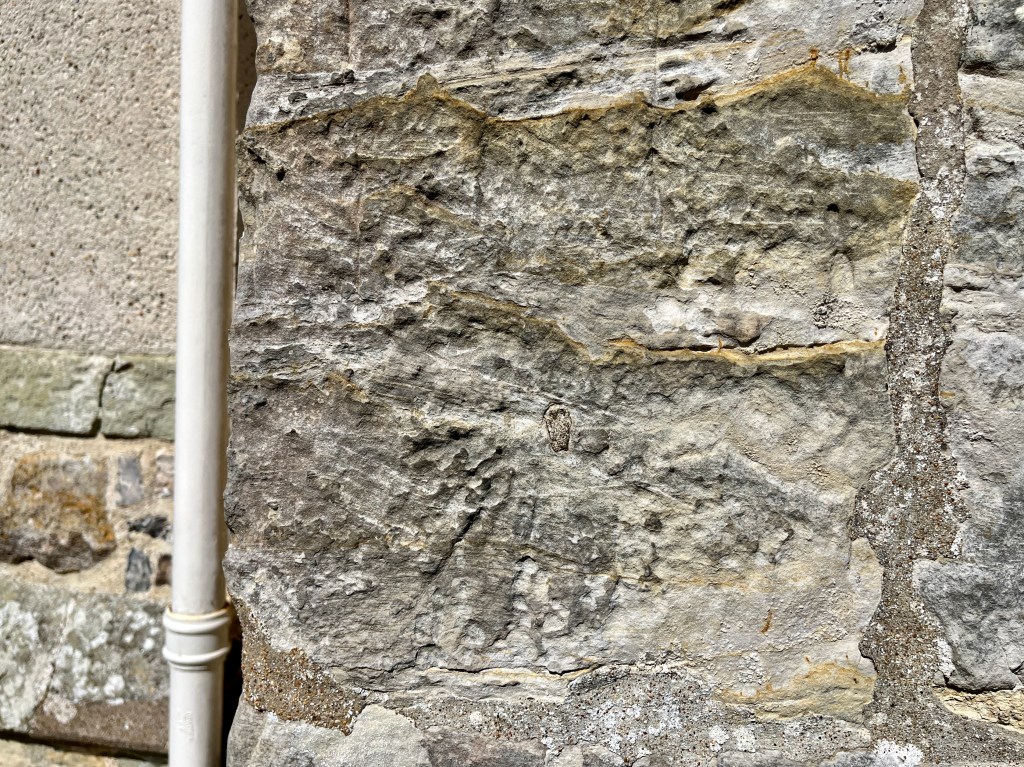
The church is said to have 3 dials, though I could only find 2 definite ones. The first is very rough, with ?2 lines dropping down from a plugged hole, and some scrapes around the area. It’s hard to see how it marked the course of the day effectively. The hardness of the stone may explain it.

❖
DIAL 2
An intriguing dial in quadrant form, and cut on a shaped stone re-sited from elsewhere on the church. The images below show the dial as it is now, located URQ – the least effective location for marking the passage of today.
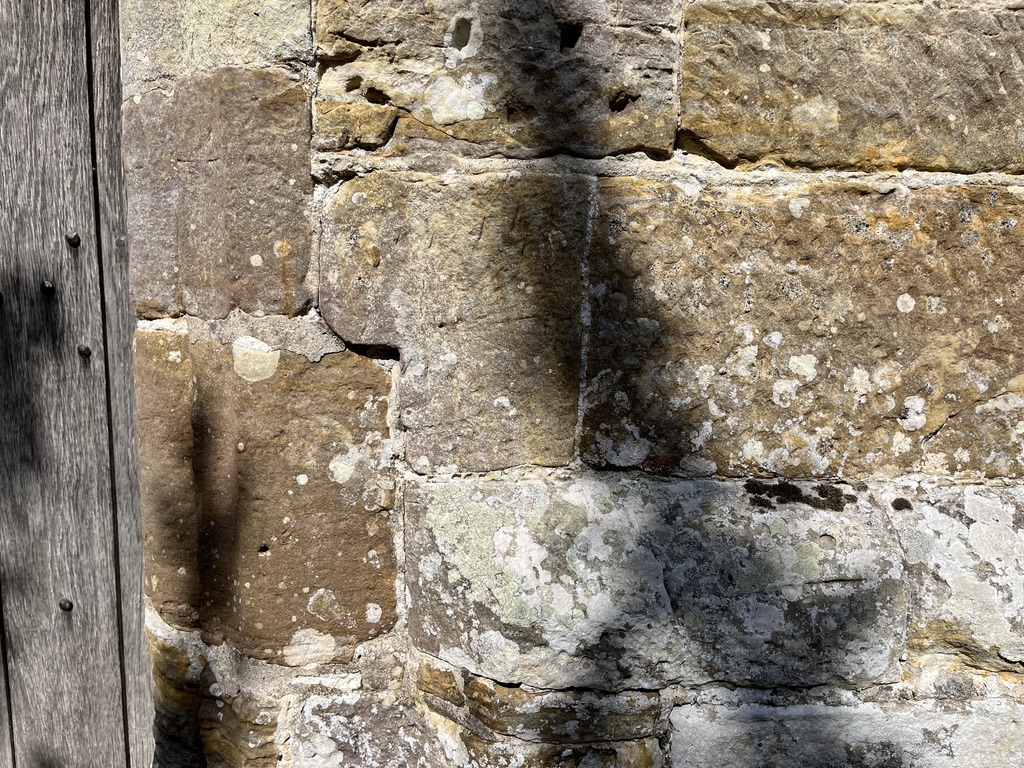

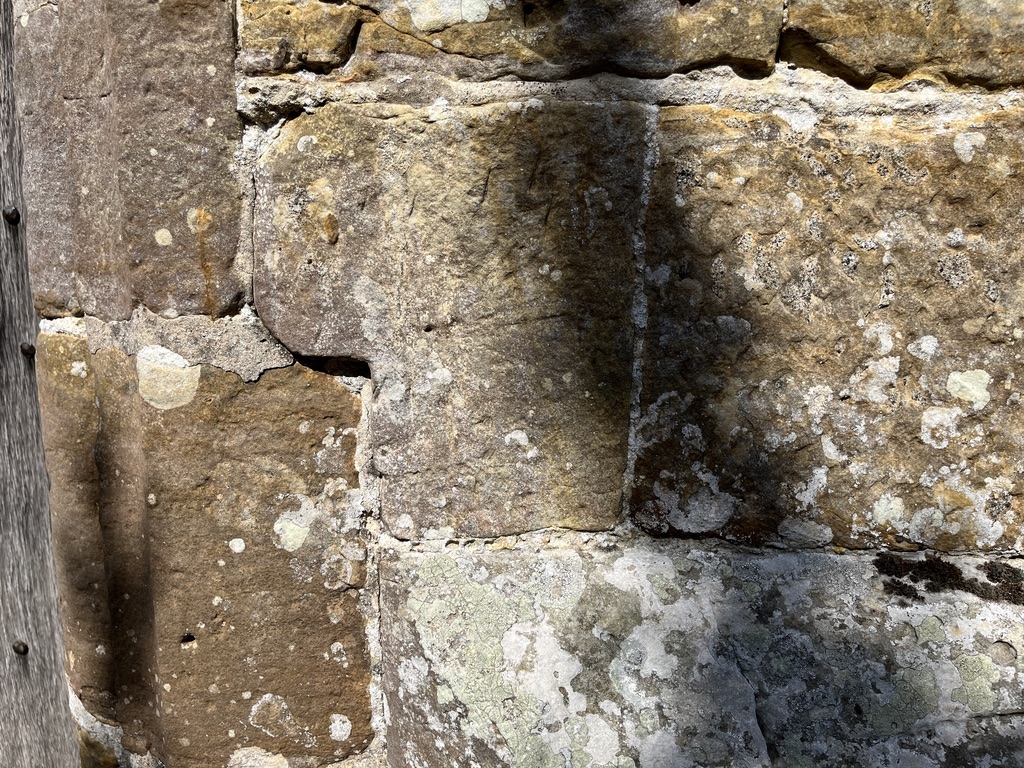
Two orientations could have worked: as a morning dial (LLQ) or an afternoon dial (RLQ). But then the stone would have needed to be recut…


❖
DIAL 3?
I did not find a definite 3rd dial, but on an adjacent stone to the others is one with a mix of holes. Two have faint lines / possible radials. If I had to choose one, it would be top left. Any helpful views welcome.


GSS Category: Scratch Dial; Mass Dial; Lost Dial
All photos: Keith Salvesen
RAGUSA . SICILY . SAN VINCENZO FERERRI – Vertical Dial

SAN VINCENZO FERERRI . RAGUSA . SICILY
The church was built by Dominican monks and dates to c1509. In 1693 it was largely destroyed by an earthquake. Rebuilding followed by later work and restorations followed. C20 saw a number of actual or intended improvements, encapsulated in one source as ‘underwent serious transformations… these interventions led to total abandonment of the church and also led to the collapse of the roof‘. The church is now deconsecrated and is used as a public auditorium.

DIAL
This splendid dial is on the W end wall of the church, a marker for the passage of the afternoon and evening. The location suggests that the most significant time for observance was in the latter part of the day. The hour lines are painted black; the equinox lines are red. The ‘grid’ includes an angled path from Leo to Gemini.

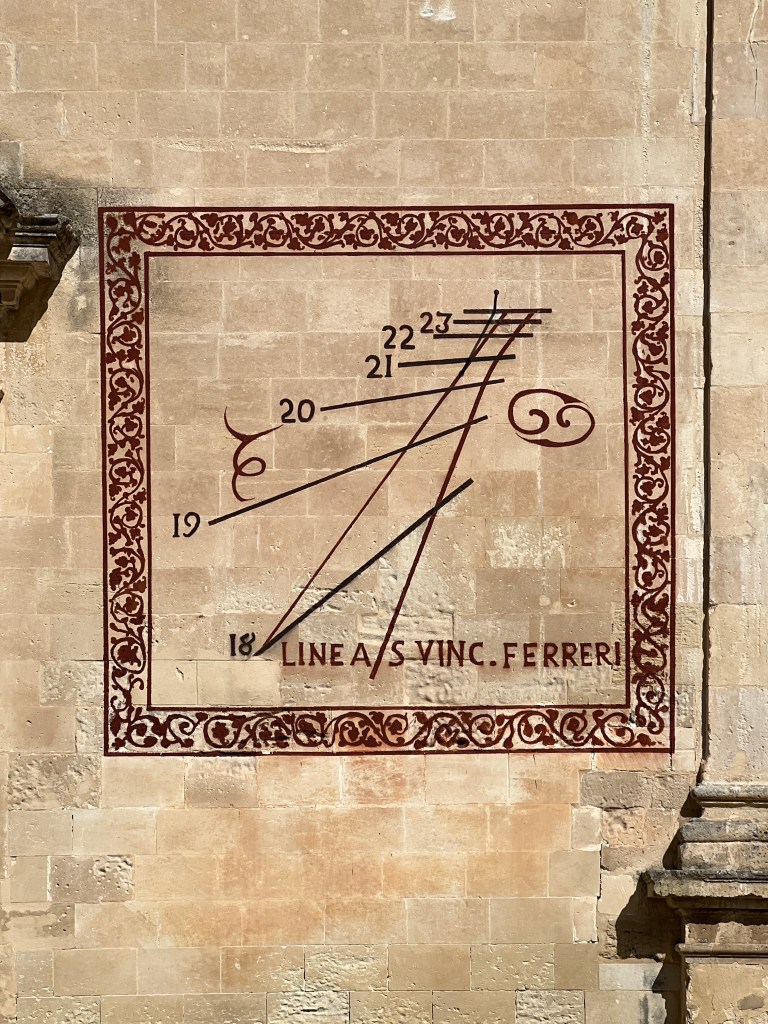
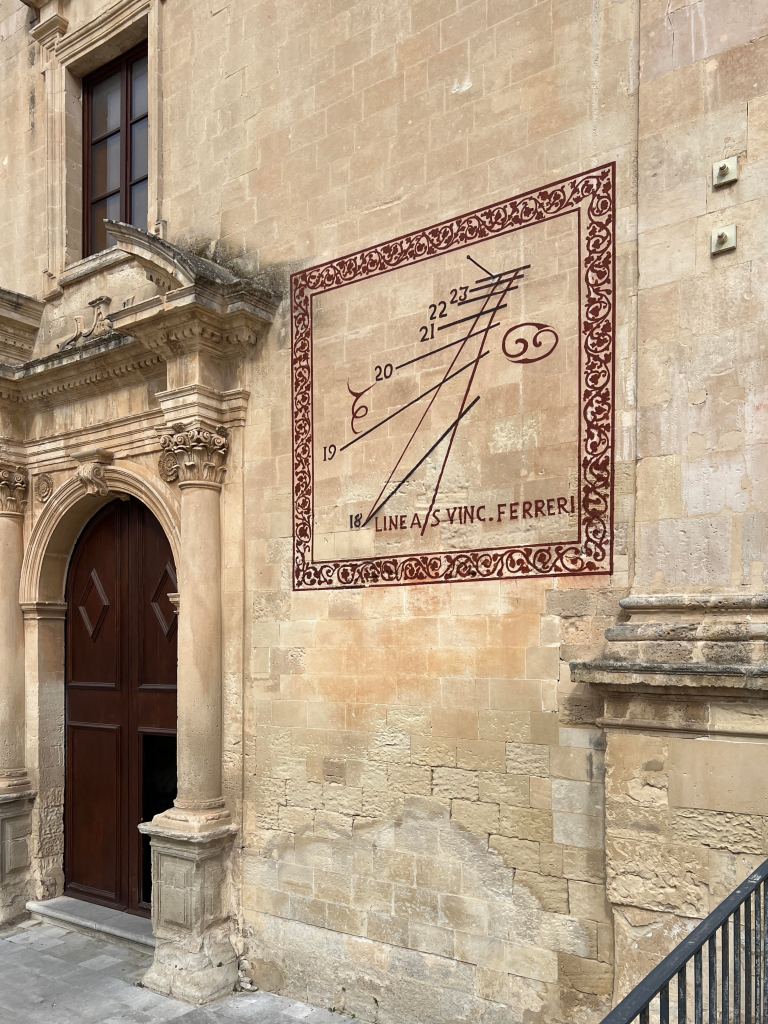
Credits: all photos except header, John Renner (with thanks for yet another fine Italian dial); enjoysicilia.it for helpful information about the church and its dial.
CHILDREN’S ENCYCLOPAEDIA SUN-DIAL

The Children’s Encyclopaedia was published between 1908 and 1964. It was an ambitious and popular learning resource devised by Arthur Mee. It covered a broad spectrum of topics that sparked interest in – and inspired – many youngsters during its long lifespan. This sundial involved some awareness of compass principles and of the passage of time in a readily understandable form. The material benefit for the young readers was a direct involvement with topics that an iPhone can help with without the underlying principles being known let alone understood. Some young enthusiast must have added compass points in the image below.
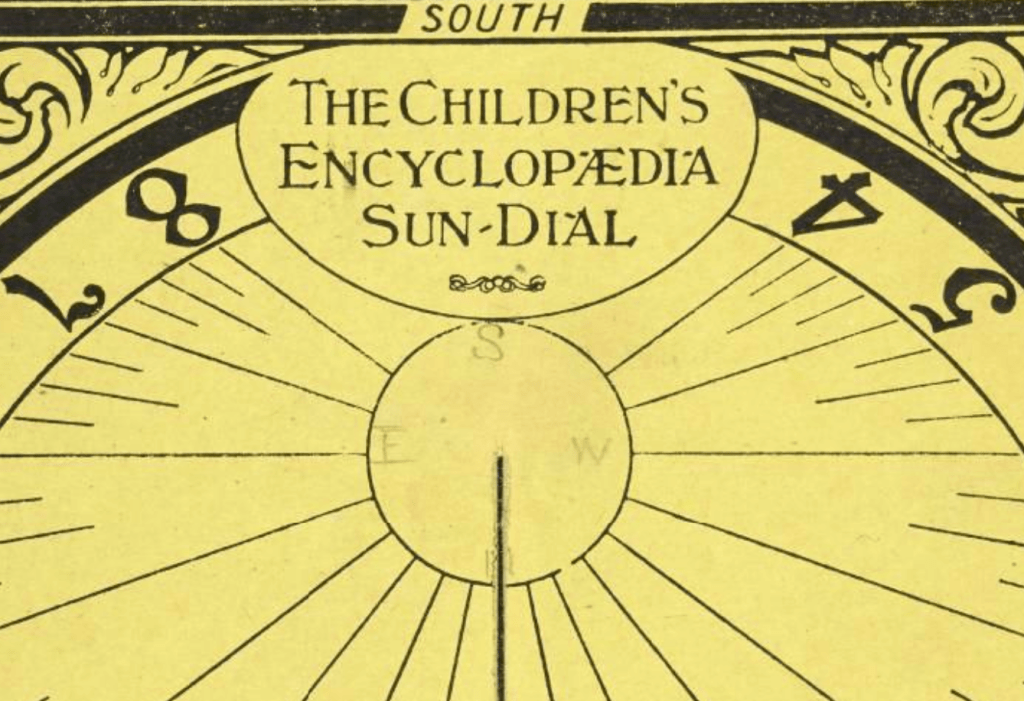

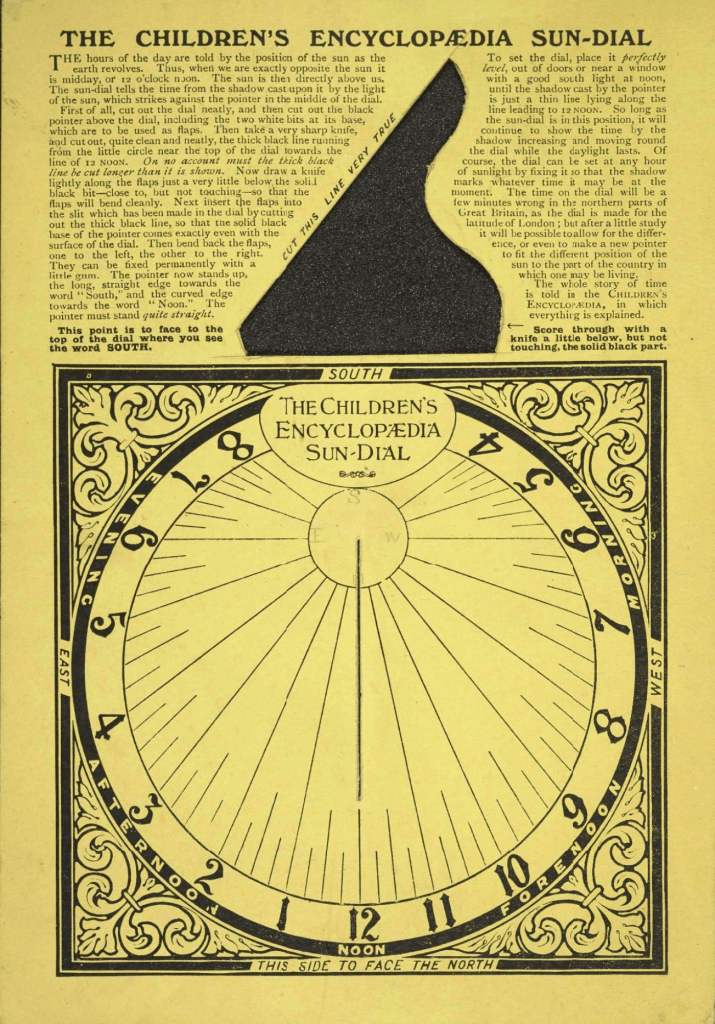
CREDIT: P. Delehar -The Children’s Encyclopaedia Sundial in cardboard
Science Museum Group © The Board of Trustees of the Science Museum
GSS Category: Cardboard Sundial; Child’s Sundial Project; Sundial as educational tool
HORTON . GLOS . ST JAMES THE ELDER – Vertical Dial

ST JAMES THE ELDER . HORTON . GLOS
GRADE I ❖ C12 origins; rebuilt C14; subsequent alterations C15/16; restoration 1865. Fine S porch with a splendid collection of carvings; interesting monuments within. On the Cotswold Way NE of Chipping Sodbury. 51°33’49″N 2°20’20″W ST766850
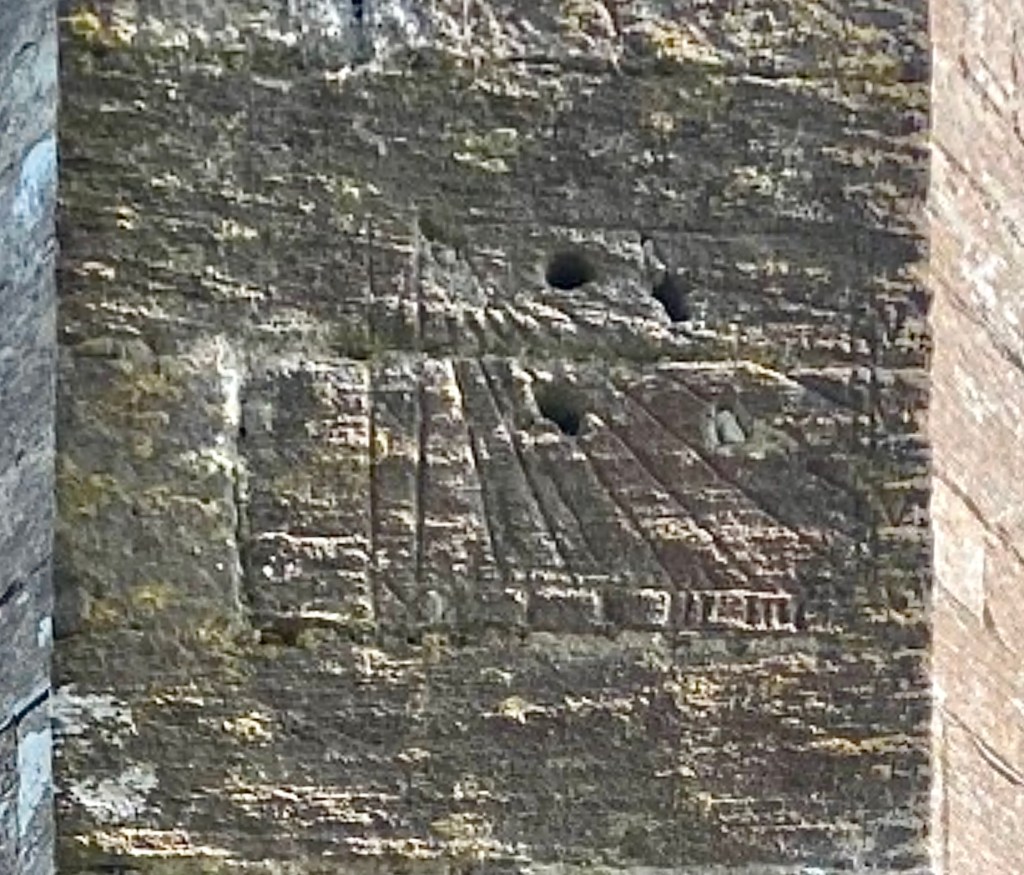
VERTICAL DIAL
This rather splendid dial, cut high on a buttress, is somewhat rustic for its exalted position. It faces SW, which explains why the lines radiate from a corner, rather than top centre or central to the dial stone. The randomness of the radials and the gaps between them suggests difficulty matching them with the positions of the roman numerals along the base and RHS of the dial.

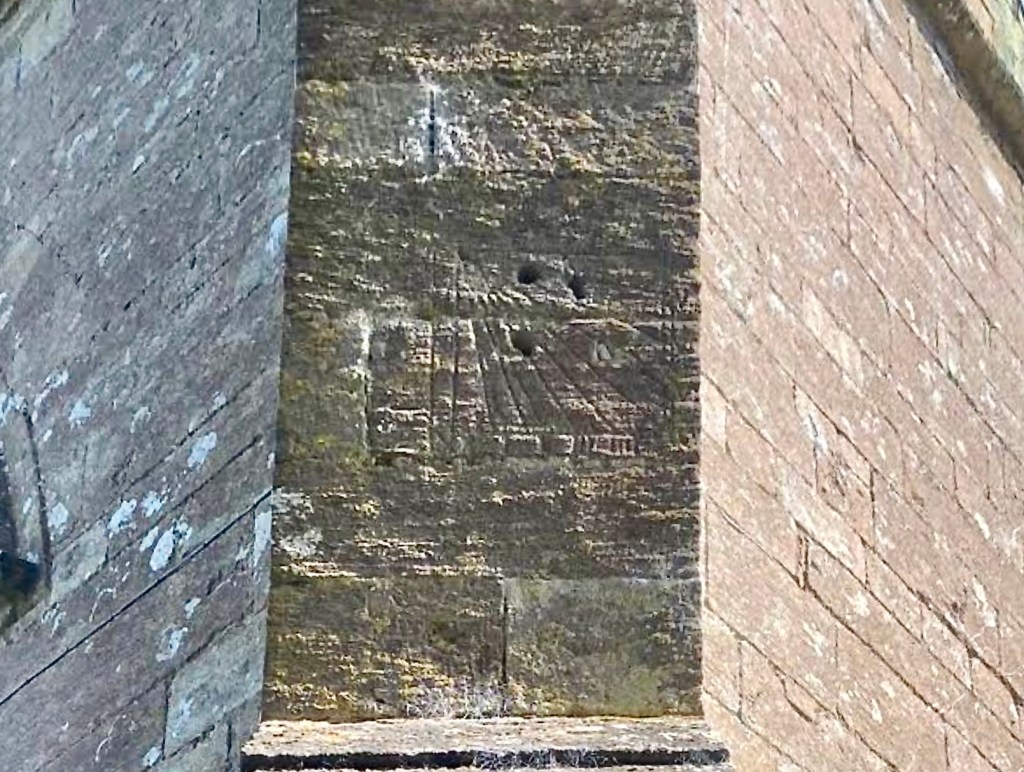
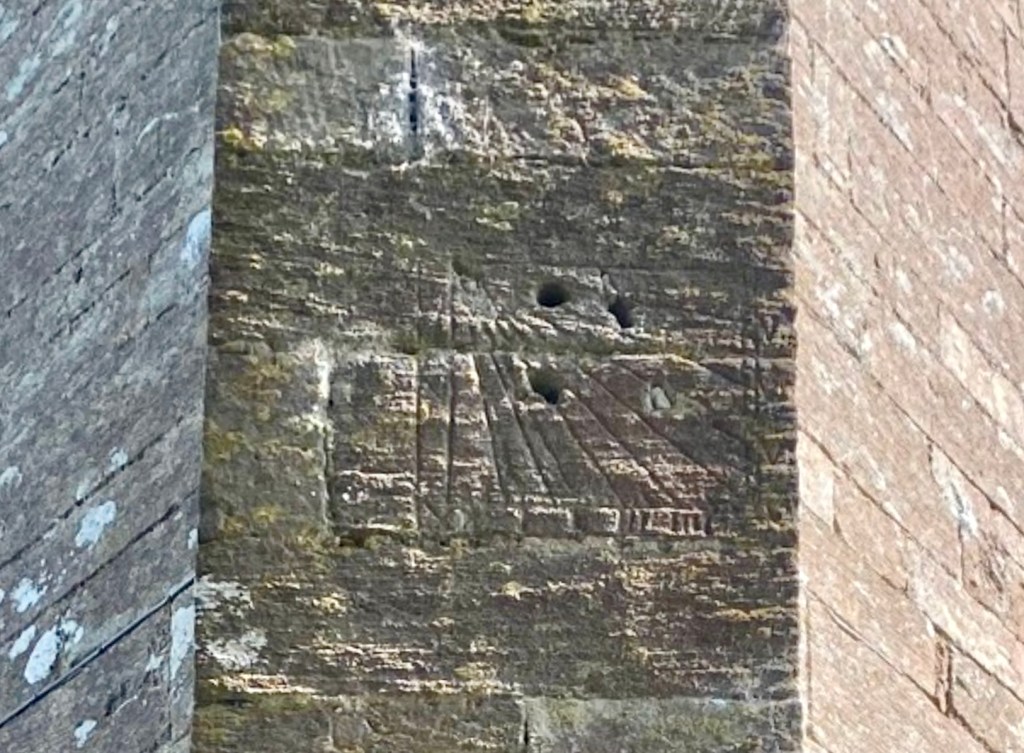
BRITISH SUNDIAL SOCIETY RECORD 1998


GSS Category: Vertical Dial; Dial on Church
CREDIT: Martin May, with thanks for contacting me and for the excellent photos of this interesting dial
 GAUDIUM SUB SOLE . SUNDIALS . MEDIEVAL TO MODERN